
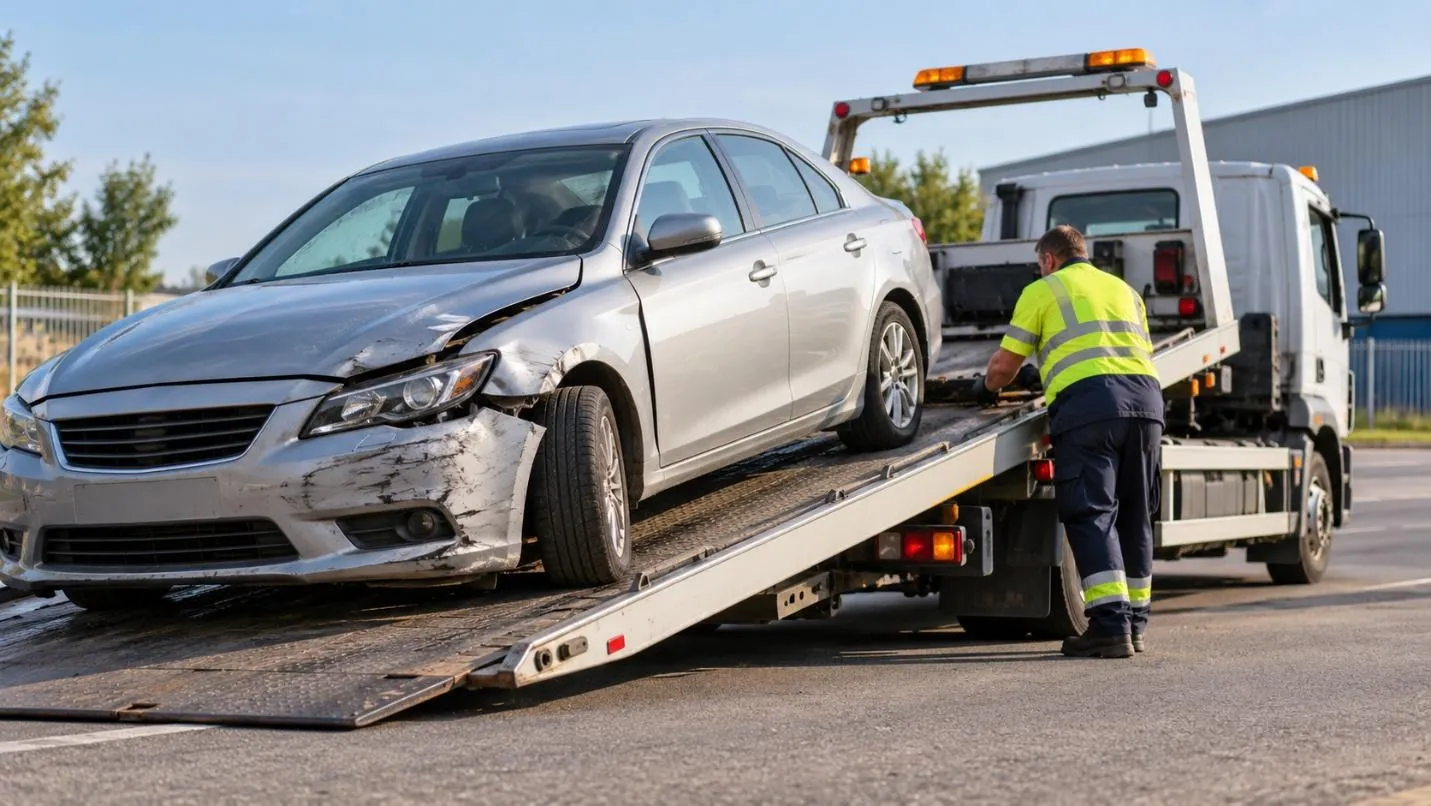
Moving a roadworthy vehicle from one location to another is usually straightforward. The situation becomes more complicated when a vehicle cannot be driven, does not roll properly, has suffered collision damage or is positioned somewhere that conventional towing equipment cannot easily access.
In these situations, the challenge is not simply transporting the vehicle. The towing operator needs to consider its condition, surroundings and the safest way to load, secure and move it without causing further damage.
Specialist towing services are designed for precisely these circumstances.
What Makes a Vehicle Difficult to Move?
A vehicle does not necessarily need to be badly damaged to become difficult to transport. Even a relatively minor mechanical problem can make conventional towing unsuitable.
Common examples include vehicles with:
-
Damaged steering or suspension
-
Flat, damaged or seized wheels
-
Major engine or transmission problems
-
Collision damage
-
Very low ground clearance
-
Missing or damaged components
-
Expired registration or an otherwise unroadworthy condition
-
Restricted access around their current location
Access can sometimes be as important as the vehicle itself. A car that will not start in an open driveway may be relatively simple to recover, while the same vehicle parked several levels underground could require a significantly different approach.
Based on experience assisting vehicle owners with towing and recovery jobs, seemingly small details such as whether the wheels roll, whether the steering works and how much clearance surrounds the vehicle can materially affect how it should be moved.
Why Specialist Towing Equipment and Experience Matter
Trying to move an immobile or damaged vehicle using an unsuitable towing method can create additional problems. Damaged wheels can drag, bodywork can make contact with the ground, and components already weakened by an accident can deteriorate further during loading.
This is where an experienced operator becomes important.
Companies such as Underground Towing & Salvage handle vehicles that may require more than a straightforward roadside pickup, including situations involving restricted access, damaged vehicles and cars that cannot safely move under their own power.
The appropriate recovery method depends on the circumstances. Operators may need to carefully winch the vehicle into position, account for wheels that will not rotate or use equipment suited to restricted spaces.
The objective is to control the vehicle throughout the recovery rather than simply pulling it from one location to another.
Moving Vehicles That Are No Longer Roadworthy
There are many reasons a vehicle may need transporting even though it is not legally or mechanically suitable to be driven.
An accident-damaged vehicle may need to be moved to a repairer, assessment centre or storage facility. A project vehicle may need transport between workshops. An unregistered car may be changing ownership or being relocated before roadworthy work is completed.
Major mechanical failures can create similar circumstances.
Attempting to drive a vehicle with damaged suspension, steering, braking or drivetrain components can increase the risk of further mechanical damage and create unnecessary safety concerns. Professional towing allows the vehicle to be transported without relying on its ability to operate normally.
This is particularly useful when the full extent of the damage has not yet been established.
Recovering Vehicles From Confined Locations
Not every towing job begins on the side of a road.
Vehicles can break down or become immobilised inside underground car parks, apartment complexes, narrow driveways, commercial buildings and other restricted-access locations.
These environments introduce additional considerations such as:
-
Height restrictions
-
Tight corners
-
Narrow ramps
-
Limited manoeuvring space
-
Other parked vehicles
-
Pillars and structural obstacles
-
Steep entrances and exits
A conventional tow truck may not always be able to reach the vehicle directly.
Underground Towing frequently deals with situations where understanding the access conditions is just as important as understanding the vehicle fault. Providing details about height restrictions, parking levels, vehicle position and available space before the operator arrives can help determine what equipment will be suitable.
Protecting the Vehicle During Transport
Successful vehicle recovery does not end once the vehicle has been loaded.
It must also remain properly positioned and restrained during transport.
This becomes particularly important when dealing with damaged or non-running vehicles because they may not behave like a normal roadworthy vehicle during loading and securing. Damaged suspension, wheels or body components may require additional consideration.
Australia’s National Transport Commission has published the Load Restraint Guide, which provides guidance around safely restraining loads during road transport. While professional towing involves its own equipment and operating procedures, the broader principle is the same: anything being transported needs to remain secure under the forces encountered during normal road travel.
A towing operator therefore needs to consider both how the vehicle will be recovered and how it will remain secure until it reaches its destination.
Assessing the Situation Before the Tow
One of the most useful things a vehicle owner can do is provide accurate information before booking a difficult tow.
Useful details include:
-
The vehicle’s make and model
-
Its approximate condition
-
Whether it starts
-
Whether the wheels turn freely
-
Whether the steering works
-
Any visible collision damage
-
The vehicle’s location
-
Height or access restrictions
-
The intended destination
Photographs can also be useful where significant damage or unusual access conditions are involved.
The more information the towing company has in advance, the better it can assess what may be required.
According to Joshua Harrison, Founder of Underground Towing & Salvage, difficult recoveries often become easier when the operator understands the vehicle’s condition and surroundings before arriving. A car with seized wheels, damaged steering or restricted access may require a completely different approach from a standard breakdown. Accurate information about the vehicle and its location helps the operator assess the job properly and reduce the chance of additional damage during loading and transport.
When Should You Call a Specialist Towing Service?
Specialist assistance is worth considering whenever there is uncertainty about whether a vehicle can be moved using conventional methods.
Situations may include:
-
The vehicle cannot roll normally.
-
The steering is damaged or locked.
-
One or more wheels are seized or badly damaged.
-
The vehicle has suffered substantial collision damage.
-
It cannot legally or safely be driven.
-
It is located in an underground or confined area.
-
Access for a standard tow truck is limited.
-
The owner is concerned that moving it incorrectly could cause further damage.
It is generally better to explain the full situation when making the booking rather than assuming every towing vehicle can handle every recovery.
That allows the towing provider to assess the circumstances and determine whether specialist equipment or a different approach is needed.
Getting a Difficult Vehicle Moved Safely
Moving an unroadworthy, damaged or inaccessible vehicle involves more than attaching it to a tow truck.
The condition of the vehicle, whether its wheels and steering operate normally, the available access and the method used to secure it can all influence how the recovery should be handled.
For straightforward breakdowns, conventional towing may be sufficient. When the vehicle is damaged, immobilised or located somewhere difficult to access, specialist towing experience can help ensure the recovery is carried out in a controlled way while reducing the risk of further damage.
Providing clear information before the tow and choosing a provider equipped for the circumstances can make a difficult vehicle move considerably more manageable.
